

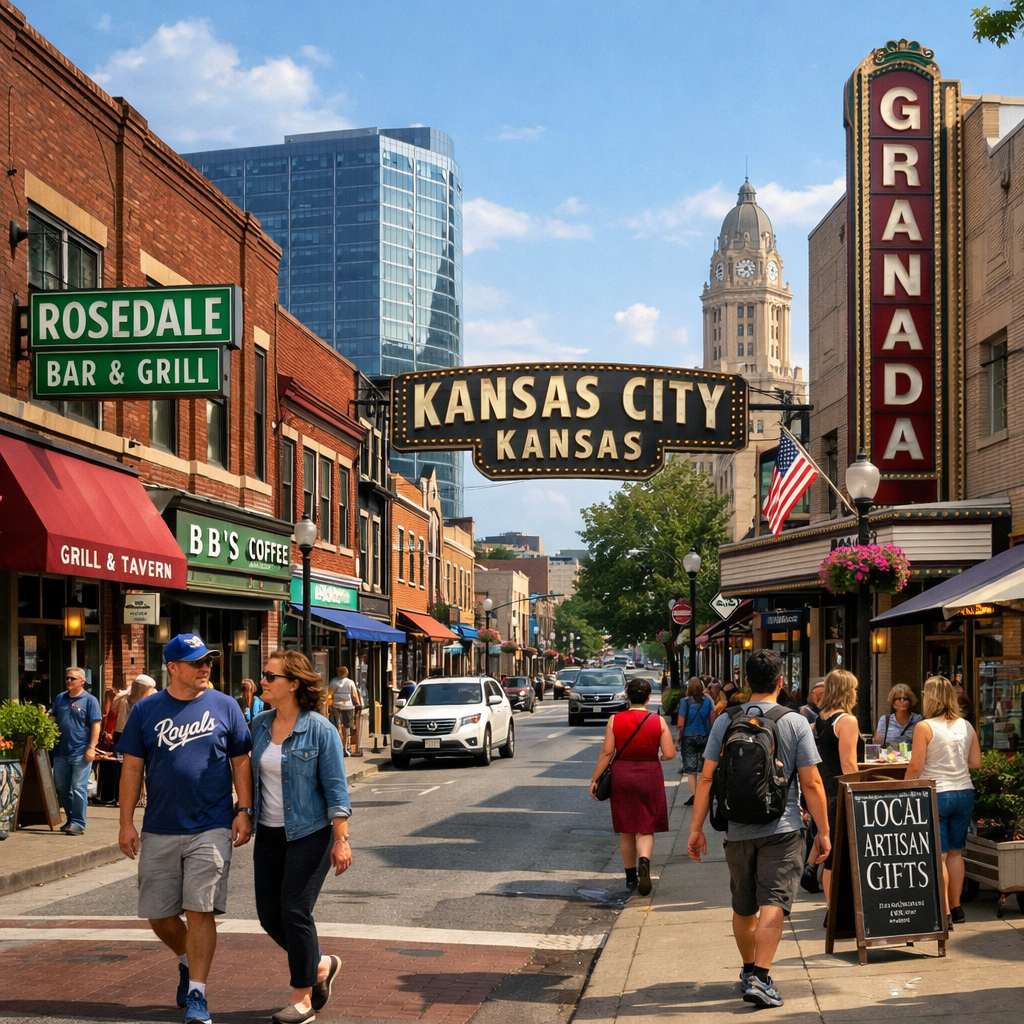
Kansas City, Kansas, is experiencing a dynamic economic transformation, marked by significant developments across various sectors. This article provides an overview of the current economic landscape, highlighting key growth areas, challenges, and opportunities that are shaping the local business environment.
Downtown Revitalization and Population Growth
Downtown Kansas City has become a focal point for economic activity and residential growth. The area has seen a 139% increase in population since 2000, now housing over 32,000 residents. This surge has been accompanied by the conversion of more than 40 buildings into housing, creating a vibrant mixed-use district that blends employment centers with residential neighborhoods. The Downtown Council projects a further 33% population increase over the next decade, adding approximately 11,000 new residents. This growth underscores the need for expanded housing and infrastructure to accommodate the influx.
Major Development Projects
Several large-scale development projects are underway, aiming to revitalize neglected areas and stimulate economic growth. In the Historic Northeast, a $180 million redevelopment project is set to transform 22 acres into a public market, business incubator, and low-income housing. Similarly, the West Bottoms area is undergoing a $527 million redevelopment, introducing over 1,200 new apartments and commercial spaces over the next 10–15 years. These initiatives are expected to attract new businesses and residents, contributing to the city’s economic vitality.
Entrepreneurship and Support for Black-Owned Businesses
Entrepreneurship remains a cornerstone of Kansas City’s economy. Organizations like KC G.I.F.T. have been instrumental in supporting Black-owned businesses, addressing historical disparities in business ownership. Since its inception, KC G.I.F.T. has provided substantial funding to Black entrepreneurs, fostering economic empowerment and community development. Additionally, the Economic Development Corporation of Kansas City (EDCKC) continues to implement strategies that create quality jobs, revitalize neighborhoods, and empower small businesses through business development, land development, and entrepreneurial support.
Challenges and Considerations
Despite these positive developments, challenges persist. The city faces an affordable housing shortage of approximately 68,000 homes, exacerbated by rising rents and limited affordable options. Efforts are underway to address this issue, including proposed reductions in development fees for affordable housing units. Additionally, while the tech sector contributes significantly to the local economy, there is a critical need to expand and explore nontraditional talent sourcing strategies to develop, attract, grow, and retain talent.
Conclusion
Kansas City’s economic landscape is marked by robust growth and revitalization efforts. While challenges remain, the city’s commitment to development, entrepreneurship, and community support positions it as a dynamic and evolving economic hub. Continued collaboration among stakeholders will be essential in navigating the complexities of growth and ensuring inclusive prosperity for all residents.